
BRUSSELS, October 21, 2026: Türkiye has called on Belgium to take stronger action against organisations Ankara identifies as terrorist groups, as senior ministers from both countries seek closer cooperation on security, extradition, organised crime and irregular migration.
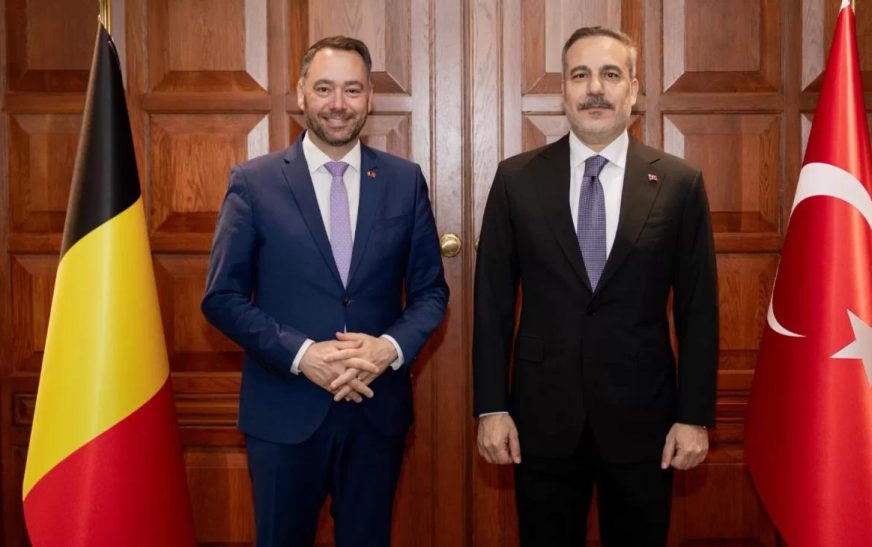
The demands were raised during high-level talks in Brussels on October 20, bringing together foreign, justice and interior ministers from Türkiye and Belgium.
The meeting marked the revival of a ministerial dialogue that had not taken place in this format for approximately a decade.
Turkish Foreign Minister Hakan Fidan, Justice Minister Akın Gürlek and Interior Minister Mustafa Çiftçi represented Ankara.
Belgium was represented by Deputy Prime Minister and Foreign Minister Maxime Prévot, Justice Minister Annelies Verlinden, Interior Minister Bernard Quintin and Asylum and Migration Minister Anneleen Van Bossuyt.
Türkiye Calls for Stronger Action Against Armed and Suspected Extremist Groups
During the discussions, Turkish officials urged Belgian authorities to strengthen measures against organisations that Ankara considers threats to its national security.
Türkiye specifically raised concerns about the Kurdistan Workers’ Party (PKK) and the movement it refers to as FETO, which Ankara holds responsible for the failed coup attempt in July 2016.
The PKK is designated a terrorist organisation by Türkiye and the European Union. However, the Turkish government’s designation of the Gülen movement as FETO is not universally recognised internationally.
Turkish officials called for closer monitoring of organisations and institutions they believe are connected to these movements.
Ankara also requested greater cooperation over extradition cases involving individuals sought by Turkish authorities.
Such requests remain subject to Belgian law, applicable international obligations and judicial procedures.
Judicial and Police Cooperation
Security and law enforcement cooperation formed a major part of the discussions.
The two sides examined ways to improve communication between their police and judicial authorities, particularly in cases involving organised crime and international criminal networks.
Belgian officials also highlighted the importance of cooperation between national police services as criminal organisations increasingly operate across borders.
The discussions included plans for stronger information sharing, professional exchanges and joint training.
A proposed bilateral police cooperation action plan was identified as a possible means of improving coordination between the two countries.
The ministers also discussed efforts to combat drug trafficking, arms smuggling and other forms of organised criminal activity.
Migration and Border Security
Irregular migration was another major issue on the agenda.
Türkiye and Belgium examined opportunities to strengthen cooperation on migration management, consular matters and the movement of people between the two countries.
Turkish officials emphasised the importance of international coordination against migrant-smuggling networks.
They also called for greater cooperation with European countries on voluntary returns and migration-related responsibilities.
Belgium acknowledged Türkiye’s important role in migration management, particularly because of its geographical position between Europe and the Middle East.
Both sides recognised that effective responses to cross-border migration challenges require cooperation between national authorities.
Belgium Highlights Türkiye’s Strategic Importance
Belgian Foreign Minister Maxime Prévot emphasised Türkiye’s significance to European security.
Belgian officials pointed to Ankara’s NATO membership and its diplomatic relationships in regions including the Black Sea, the Middle East and Africa.
Türkiye has maintained communication with both Russia and Ukraine during the war, while also playing a diplomatic role in regional developments involving Syria and Gaza.
The Brussels meeting therefore addressed broader regional and international issues alongside bilateral security matters.
Renewed Diplomatic Engagement
The latest ministerial meeting reflects efforts by Ankara and Brussels to strengthen relations after a prolonged gap in high-level talks.
The previous meeting in this format was held in Ankara in 2016.
Officials from both countries have identified security, migration, justice and economic cooperation as important areas for further engagement.
However, the implementation of proposed measures, particularly those concerning extradition and suspected extremist organisations, will depend on subsequent decisions and relevant legal procedures.
The discussions underline Türkiye’s determination to secure stronger European cooperation on national security matters, while Belgium continues to emphasise the importance of legal safeguards and international coordination.