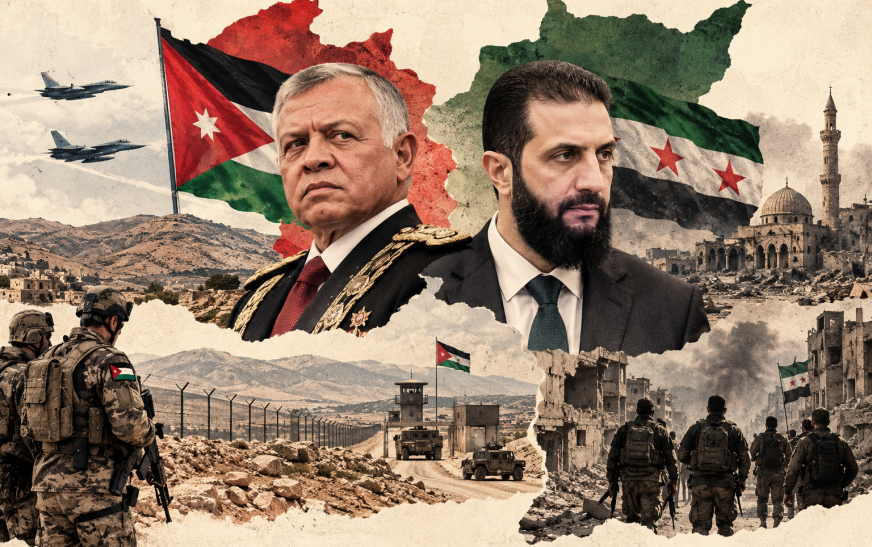

Syria has introduced significant changes to its school history textbooks, removing several negative descriptions of the Ottoman Empire and revising accounts of the Arab Revolt and Ottoman officials. The changes, introduced under President Ahmed al-Sharaa, reflect a shift in how the country presents its Ottoman past amid improving diplomatic relations with Türkiye.
According to a report published by education monitoring organisation IMPACT-se on October 19, the revised curriculum replaces terminology associated with Arab nationalist opposition to Ottoman rule with more neutral historical descriptions.
The organisation examined 130 textbooks used during the 2025–26 academic year, comparing them primarily with editions published under the former government of Bashar al-Assad in 2017–18.
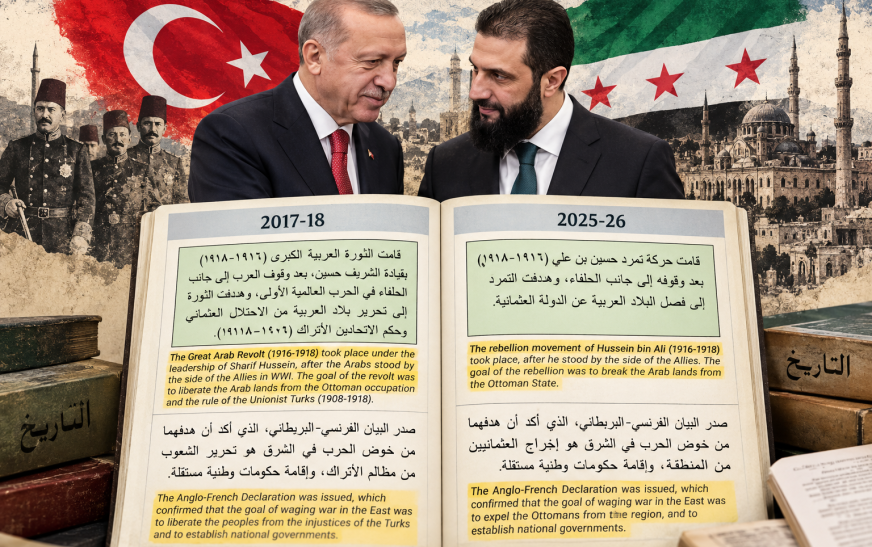
One of the most notable changes concerns the Arab uprising of 1916–1918, traditionally described in Syrian textbooks as the “Great Arab Revolt.”
The revised Grade 12 history textbook no longer uses that designation. Instead, it refers to the event as the rebellion led by Hussein bin Ali, commonly known as Sharif Hussein.
Earlier textbooks portrayed the uprising as a struggle for Arab independence from Ottoman occupation. The new version describes its objective as separating Arab territories from the Ottoman state, while placing greater emphasis on Sharif Hussein’s cooperation with Britain and other Allied powers during the First World War.
Another significant revision concerns Ottoman commander Ahmed Cemal Pasha, who previously appeared in Syrian textbooks under the title “Butcher of the Arabs.”
The designation was associated with the execution of Arab nationalist figures in Damascus and Beirut on May 6, 1916.
The revised textbooks remove the controversial epithet and introduce a different explanation of the executions, describing some of those executed as individuals accused of collaborating with Britain and France.
However, the executions themselves have not been removed from the historical narrative. Instead, the revised account identifies them as one of the developments that accelerated Sharif Hussein’s rebellion against Ottoman authority.
The changes follow instructions issued by Syria’s Ministry of Education in January 2025, shortly after the collapse of the Assad government.
Under those directives, references to “Ottoman occupation” were to be replaced with expressions such as “Ottoman rule” or “Ottoman administration.”
The revised curriculum also places greater emphasis on the Ottoman state’s political and Islamic identity, moving away from earlier interpretations that primarily presented the period through the perspective of Arab nationalism.
IMPACT-se found that many of the directives had been incorporated into the 2025–26 textbooks, although implementation varied across subjects and editions.
Rather than introducing an entirely new curriculum, Syrian authorities retained much of the existing material while selectively changing historical descriptions and interpretations.