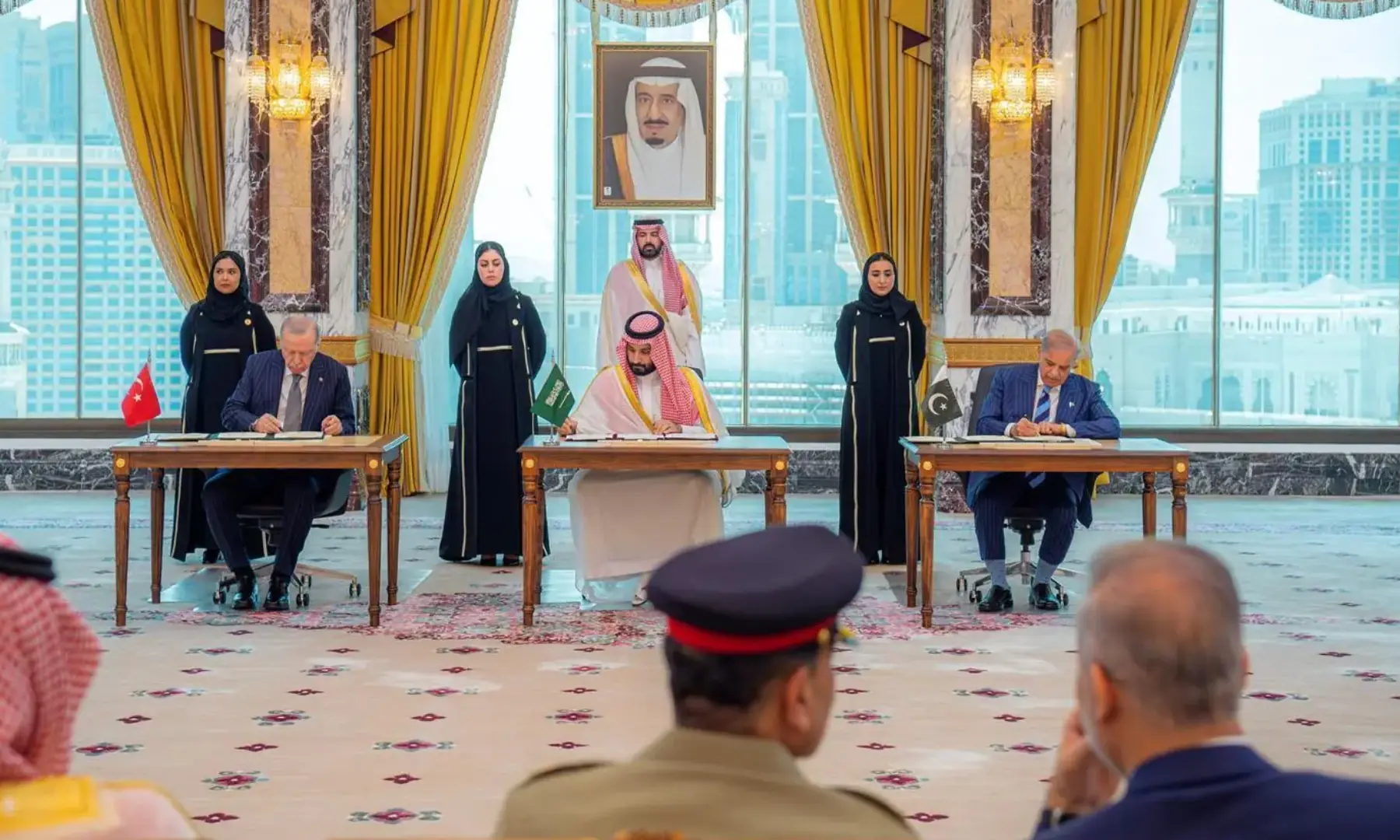

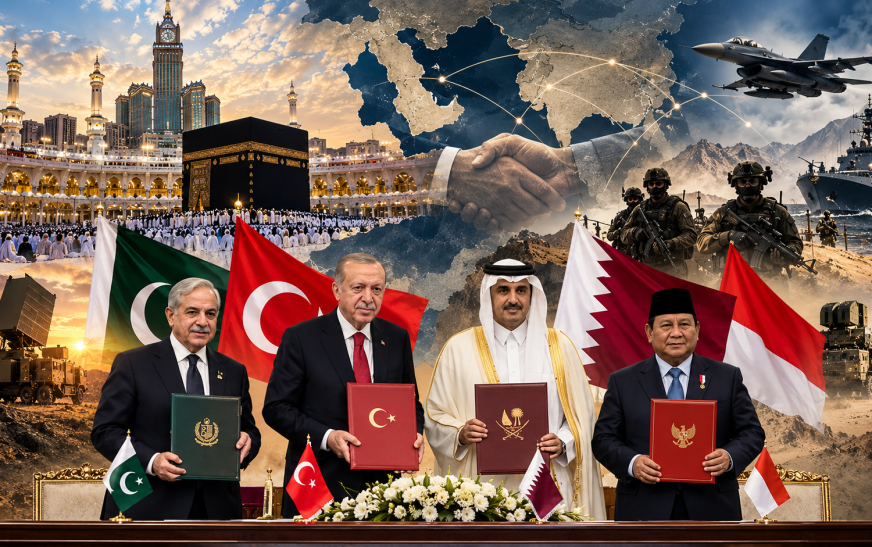
Pakistan, Türkiye, Qatar and Indonesia have signed a multilateral defence cooperation memorandum of understanding, known as the Badr Agreement, aimed at strengthening their military capabilities, expanding joint defence production and promoting collaboration in research, technology and training.
According to Türkiye’s Ministry of National Defence, the agreement was signed on Wednesday in Doha, Qatar, bringing together senior defence officials from all four countries.
The agreement was signed by Turkish Defence Minister Yaşar Güler, Pakistan’s Defence Minister Khawaja Muhammad Asif, Qatar’s Deputy Prime Minister and Minister of State for Defence Affairs Sheikh Saud bin Abdulrahman bin Hassan Al Thani, and Indonesian Deputy Defence Minister Yusuf Jauhari.
Haluk Görgün, President of Türkiye’s Defence Industry Agency, also attended the signing ceremony, according to Turkish public broadcaster TRT.
What Does the Badr Defence Agreement Cover?
The Turkish Defence Ministry said the memorandum establishes a framework for strengthening cooperation across several areas of defence and military development.
The participating countries intend to combine their industrial capabilities, improve military readiness and encourage partnerships between their respective defence manufacturers.
According to Reuters, the agreement covers joint military exercises, professional training, technical cooperation, research and development, and initiatives designed to strengthen the defence industries of all four countries.
The arrangement is also expected to encourage the development of technological solutions that respond to advances in modern military systems.
Rather than focusing exclusively on the purchase of military equipment, the participating countries aim to expand cooperation in designing, developing and manufacturing defence products.
This approach could allow the four countries to make greater use of their existing expertise, industrial infrastructure and technological resources.
Economic and Industrial Significance
Turkish defence officials have highlighted the potential economic benefits of the Badr Agreement, particularly through closer industrial coordination and shared manufacturing initiatives.
The memorandum seeks to create opportunities for defence companies and technical institutions to cooperate on projects that could strengthen domestic production capabilities.
Joint research programmes may also enable participating countries to exchange technical knowledge and explore new defence technologies.
Improved industrial coordination could support the development of military equipment, specialised components and advanced defence systems.
The agreement is therefore intended to serve both military and industrial objectives, creating a broader platform for cooperation among the four countries.
However, specific financial commitments, production targets and project timelines have not been publicly detailed.
Focus on Technology Transfer and Joint Manufacturing
Before the signing ceremony, Türkiye’s Defence Industry Agency outlined plans to expand cooperation beyond traditional defence procurement.
According to Anadolu Agency, the proposed framework would place greater emphasis on joint production, technology transfer, the integration of defence systems and cooperation across industrial supply chains.
These areas are increasingly important for countries seeking to strengthen their domestic defence industries and reduce dependence on external suppliers.
Technology transfer and shared manufacturing arrangements could allow participating countries to develop specialised expertise while improving their ability to produce and maintain military equipment.
The proposed cooperation could also encourage partnerships between defence manufacturers, research institutions and technical specialists.
The extent of these arrangements will depend on the specific projects and implementation mechanisms agreed upon by the participating countries.
Strengthening Multilateral Defence Relations
Türkiye’s Defence Ministry described the memorandum as an initiative intended to deepen defence relations and support longer-term strategic cooperation.
The agreement brings together four countries that already maintain defence and security relationships through various bilateral arrangements.
By establishing a multilateral framework, the Badr Agreement could provide opportunities to coordinate existing cooperation and explore new joint initiatives.
Turkish officials have also linked the arrangement to broader objectives involving regional security, stability and closer institutional relations.
The memorandum provides a foundation for cooperation, although the details of future projects will require further negotiations and decisions.
Existing Defence Partnerships Between the Four Countries
Pakistan and Türkiye have maintained extensive military and defence industry cooperation for several years.
One of their most prominent joint projects is the Pakistan Navy’s MILGEM corvette programme, which combines Turkish naval technology with shipbuilding activities in Pakistan.
The programme reflects the two countries’ growing cooperation in naval manufacturing, technology and technical training.
Pakistan also maintains defence and security ties with Qatar, including cooperation in military training and other security-related activities.
Meanwhile, Türkiye and Indonesia have worked together on defence manufacturing projects, including the development of the KAPLAN MT medium-weight tank.
These existing partnerships provide a basis for broader cooperation under the newly signed memorandum.
What Happens Next?
The Badr Agreement marks a further step towards institutionalising defence industry cooperation among Pakistan, Türkiye, Qatar and Indonesia.
Its implementation could involve joint research projects, military training programmes, industrial partnerships and collaboration in developing modern defence systems.
However, the Turkish Defence Ministry has not announced a detailed implementation schedule or identified specific new weapons programmes under the agreement.
The memorandum should also be distinguished from a collective defence treaty. The information released so far does not establish an automatic obligation for the four countries to intervene militarily if another signatory comes under attack.
For now, the agreement represents a framework through which the participating countries can expand defence manufacturing, share technical expertise and strengthen military cooperation.
Its longer-term significance will depend on the projects developed and the practical commitments made by the four governments.